- GARDEN STATE POLISHED CONCRETE SPECIALISTS
Polished Concrete Installation Services in New Jersey
Konkreate & Epoxy transforms ordinary concrete slabs into smooth, durable, low-maintenance polished concrete floors for residential, commercial, and industrial interiors throughout New Jersey. Through professional grinding, honing, densifying, and polishing, we create refined concrete surfaces designed around the appearance and performance needs of each space.
From modern residential interiors and basements to retail showrooms, offices, warehouses, and large commercial facilities, every polished concrete project begins with a careful evaluation of the existing slab and a preparation process tailored to its condition.
- SERVICES
Professional Polished Concrete Flooring
Polished concrete is created by mechanically grinding and refining an existing concrete slab through progressively finer stages. Depending on the desired finish, the surface can range from a soft matte or satin appearance to a highly reflective polished finish.
Unlike a topical floor coating, polished concrete works with the existing slab itself, making it an attractive option for spaces where durability, easy maintenance, and a clean architectural appearance are priorities.

Multi-Stage Diamond Grinding
Professional diamond tooling is used to remove surface imperfections, refine the slab, and progressively prepare the concrete for the desired level of polish.

Concrete Densification
A concrete densifier may be incorporated into the polishing process to help strengthen and harden the surface while supporting long-term performance.

Progressive Honing & Polishing
The concrete is refined through increasingly fine tooling until the desired sheen, smoothness, and overall appearance are achieved.

Custom Finish Levels
Polished concrete can be tailored to achieve different levels of sheen and aggregate exposure, allowing the finished floor to complement both industrial and highly designed interior environments.
Basement Polished Concrete Floors
Turn unfinished or outdated basement slabs into clean, modern flooring with a polished finish that can complement finished basements, entertainment spaces, gyms, offices, and other interior living areas.
Living Rooms & Great Rooms
Polished concrete can create a sleek architectural foundation for open-concept living rooms, great rooms, and contemporary interiors where the flooring is intended to become part of the overall design.
Home Offices & Studios
Create a smooth, durable, low-maintenance surface for residential offices, studios, workshops, and other frequently used interior spaces.
Finished Garages
For homeowners looking for an exposed-concrete aesthetic rather than a resinous coating, polished concrete can provide a clean, refined finish for suitable garage slabs.
- Commercial
Commercial & Industrial Polished Concrete Services
Warehouses & Industrial Facilities
Polished concrete is well suited for many warehouses, manufacturing spaces, and industrial environments because it utilizes the existing concrete slab while creating a durable and relatively low-maintenance finished surface.
Retail Showrooms
Create a clean, professional floor that complements retail merchandise, automotive displays, furniture showrooms, and other customer-facing environments.
Offices & Professional Spaces
Polished concrete can bring a contemporary architectural finish to offices, lobbies, conference areas, studios, and other professional interiors.
Restaurants & Hospitality Spaces
For suitable environments, polished concrete can provide a distinctive finished floor for dining areas, hospitality interiors, cafés, and other commercial spaces where appearance and ease of maintenance are important.
Auto Dealerships & Showrooms
A smooth polished slab can create a bright, refined environment that complements vehicle displays while standing up to regular indoor traffic.
Benefits of Polished Concrete Flooring
Durable for High-Traffic Interiors
Properly polished concrete can perform well in spaces exposed to regular foot traffic, carts, equipment, and everyday commercial or residential use.
Low-Maintenance Surface
Polished concrete generally requires straightforward routine cleaning without the waxing schedules associated with many traditional flooring systems.
Customizable Appearance
Different levels of sheen, aggregate exposure, and staining options can be used to create a floor ranging from understated and industrial to highly decorative.
Works With the Existing Slab
When the existing concrete is suitable, polishing allows the slab itself to become the finished floor rather than covering it with an additional flooring material.
Clean, Modern Design
The seamless appearance and natural variations of polished concrete make it a strong fit for contemporary residential, commercial, and industrial interiors.
The Konkreate & Epoxy Polished Concrete Process
On-Site Evaluation
We inspect the existing slab, evaluate its condition, discuss the intended use of the space, and review the appearance you want to achieve.
Surface Preparation & Initial Grinding
The slab is mechanically prepared using professional grinding equipment to remove appropriate surface material, address imperfections, and begin refining the concrete.
Repairs & Refinement
Cracks, joints, surface defects, and other conditions are evaluated and addressed as appropriate before progressing through finer grinding and honing stages.
Densifying & Polishing
The concrete is progressively refined and, where appropriate, treated with a densifier before being polished to the selected finish level.
Final Protection & Inspection
The completed surface is inspected and any applicable protective treatment is applied based on the polishing system and intended use of the space.
The Konkreate & Epoxy Advantage
Professional Mechanical Preparation
Successful polished concrete starts with understanding the slab. Our process emphasizes mechanical preparation and progressive refinement based on the condition of the existing concrete.
Customized Finish Options
Every slab is different. We tailor the polishing process to the desired sheen, aggregate exposure, existing slab conditions, and overall design goals of the project.
Residential, Commercial & Industrial Experience
We provide polished concrete solutions for projects ranging from residential interiors to large commercial and industrial spaces throughout New Jersey.
Fully Insured
Konkreate & Epoxy is fully insured, giving homeowners, businesses, contractors, and property owners added confidence throughout the project.
Local New Jersey Service
Work directly with a New Jersey-based team focused on craftsmanship, communication, preparation, and attention to detail.
Polished Concrete Service Areas Across New Jersey
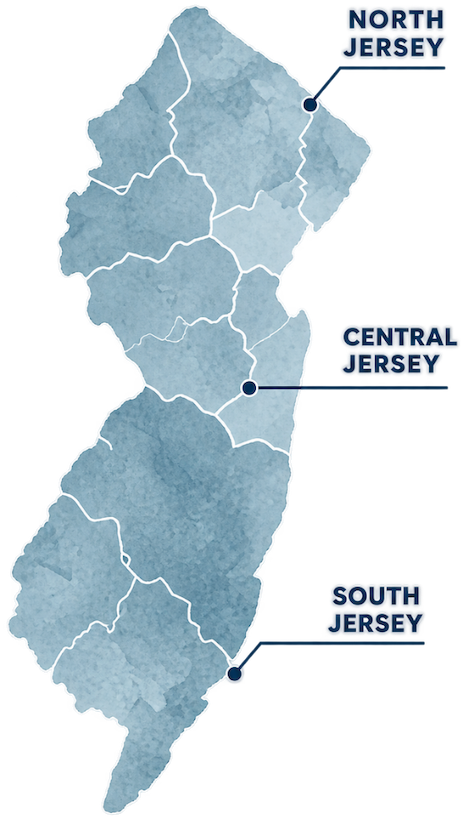
Konkreate & Epoxy provides polished concrete installation throughout North, Central, and South Jersey.
North Jersey
- Bergen County — Paramus, Hackensack, Ridgewood, Alpine
- Essex County — Newark, Montclair, West Orange, Short Hills
- Hudson County — Jersey City, Hoboken, Bayonne
- Morris County — Morristown, Parsippany, Randolph
- Passaic & Union Counties — Paterson, Wayne, Elizabeth, Union
Central Jersey
- Middlesex County — Edison, New Brunswick, Woodbridge, Cranbury
- Monmouth County — Asbury Park, Freehold, Long Branch, Red Bank
- Mercer County — Princeton, Trenton, Hamilton
- Ocean & Somerset Counties — Toms River, Brick, Bridgewater
South Jersey
- Camden County — Cherry Hill, Camden
- Burlington & Gloucester Counties — Mount Laurel, Deptford
- Atlantic & Cape May Counties — Atlantic City, Ocean City
Ready to Transform Your Concrete Floors?
Bring a cleaner, more refined finish to your home, commercial property, or industrial space with professionally installed polished concrete designed around your slab, space, and desired appearance.
Frequently Asked Questions About Polished Concrete
Polished concrete is an existing concrete slab that has been mechanically ground, honed, and polished using progressively finer diamond tooling. The process refines the surface and can produce finishes ranging from matte or satin to highly reflective.
The timeline depends on the size of the project, condition of the slab, required repairs, desired finish, and level of aggregate exposure. Many smaller projects can be completed within several days, while larger commercial or industrial installations may require additional time.
Yes. Polished concrete can work well in basements, living spaces, great rooms, home offices, studios, and other interiors where homeowners want a durable, modern, low-maintenance floor.
Yes. Polished concrete is commonly used in retail stores, warehouses, offices, showrooms, manufacturing spaces, and other commercial or industrial environments.
Like most hard flooring, slip characteristics can vary based on the finish, contaminants, moisture, maintenance, and surrounding environment. The intended use of the space should always be considered when selecting the appropriate polished concrete system and finish.
Not typically. Polished concrete mechanically refines the existing slab rather than relying on a thick topical coating to create the finished floor. Depending on the project, densifiers, stain protectors, or other treatments may be incorporated into the system.
Sometimes. Minor cracks, surface imperfections, stains, previous coatings, and slab variations do not automatically rule out polishing, but the existing concrete must first be evaluated. Heavily damaged or unsuitable slabs may require repairs or a different flooring solution.
Yes. The appearance can often be customized through different levels of sheen, aggregate exposure, stains, dyes, and other decorative treatments depending on the condition and characteristics of the slab.
Polished concrete refers primarily to the mechanical grinding and refinement of the concrete surface. Staining is used to introduce color. Staining can sometimes be incorporated into a polished concrete project to achieve both customized color and a refined finish.
Routine dust removal and damp cleaning with appropriate products are typically sufficient for regular maintenance. Maintenance requirements can vary depending on the environment, amount of traffic, finish level, and any protective treatments used.